A Blade That Moves Before He Does — Kazra and the Terrifying Bliss of Being Very Good at Violence
The Deal Series, Book 13 · by Desiree Sandz · Told through the hero's chapters · 18+
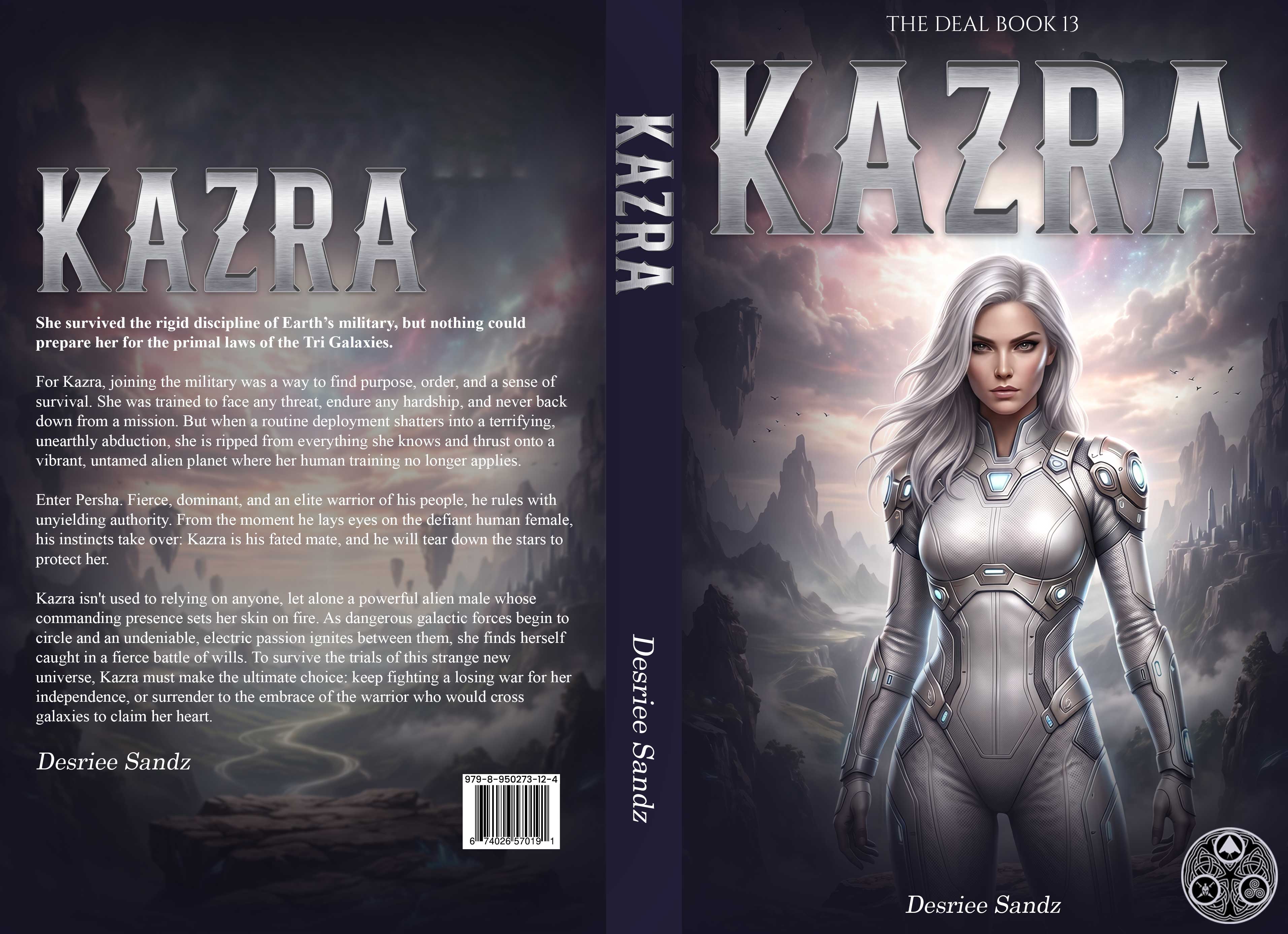
There's a passage in the middle of Kazra that stopped me cold, and it's the best action writing in The Deal series.
A prison riot. Black uniforms turning everyone into an indistinguishable blur of movement and danger. Boots hitting stone, metal clanging, adrenaline sharpening the world until it seems to slow down. And Kazra, moving on years of relentless training, watching himself from somewhere slightly outside his own body as his blade does the work — parrying, disabling, gliding through the air with a will of its own.
And then the line that makes the whole book: he feels an odd sense of bliss. Almost euphoria. Like performing an ancient dance of survival.
He is not horrified by what he's good at. That's the problem. And he knows it's the problem.
Why that matters for the romance
Because the woman he falls for makes jokes about everything, and Kazra is a man who has run out of ways to joke about himself. Persha deflects with comedy. Kazra deflects with duty. They are both extremely committed to not being looked at directly, and the entire romance is two experts in avoidance meeting their match.
What's lovely is that he's the one who breaks first. He asks her, plainly, to stop performing. To let go and show him what she actually wants. Coming from a man whose whole existence is discipline and control, that request is enormous — and it's the thing that finally gets through her armour.
Military sci-fi readers, this one's for you
- Genuine combat sequences with weight, geography and consequence
- Squad cohesion and the specific trust between people who've trained together for years
- Prison and containment operations — a corner of this universe we hadn't seen before
- The psychological cost of competence at violence, taken seriously
- Cross-over with human military culture through Persha, which is a great contrast
Two armies, one language
The smartest thing Book 13 does is put an alien warrior and a US Air Force airman in the same room and let them recognise each other instantly. Different species, different centuries of training, identical gallows humour. The mutual professional respect is written as genuinely romantic, and honestly? It is.
Spice check
Among the hottest in the series — urgent, mutual, and completely unembarrassed. Adults only.
Bottom line
At 550-plus pages, Kazra is one of the biggest books in The Deal and it uses every page. Combat, comedy, two people with matching defence mechanisms, and a hero who has to look honestly at what he enjoys. If you like your military sci-fi romance with a conscience, start here.
Two militaries, one conversation
The structural trick in Book 13 is putting a US Air Force airman and an alien warrior in the same room and letting them recognise each other on sight. Different species, wildly different training pipelines, identical humour, identical exhaustion, identical inability to talk about any of it directly.
It gives Desiree Sandz a chance to write human service culture with real specificity — the squadron characters, the collection Persha has been involuntarily curating, the small daily frictions of shared work — and hold it up against a system that's been refining warriors for centuries. The comparison flatters neither and illuminates both.
Series placement
Book 13, deep into the back half, and the payoff entry for anyone who's read the whole run. It also opens up a new region of the universe — prison and containment operations — that hadn't appeared before. If you like military sci-fi romance with a conscience and a sense of humour, this is the peak of the series.
Book 13 of The Deal series. The soldier, the airman, and the joke that finally stops working.