AI Is Transforming Scientific Discovery — Could Machines Make the Next Major Breakthrough?
Artificial intelligence is changing how scientists analyze data, develop medicines, simulate experiments, and uncover new scientific insights. Could AI eventually make discoveries that humans would never find on their own?
AI Is Transforming Scientific Discovery — Could Machines Make the Next Major Breakthrough?
For centuries, scientific breakthroughs have depended on human curiosity, careful experimentation, and years of research. Today, a new tool is changing that process: artificial intelligence.
AI is no longer being used only to automate routine tasks. Scientists are increasingly using artificial intelligence to analyze enormous datasets, predict molecular structures, identify patterns, design experiments, and explore scientific possibilities that would be difficult to investigate manually.
This raises a fascinating question: could AI eventually make a major scientific discovery that humans would struggle to find on their own?
How AI Is Changing Scientific Research
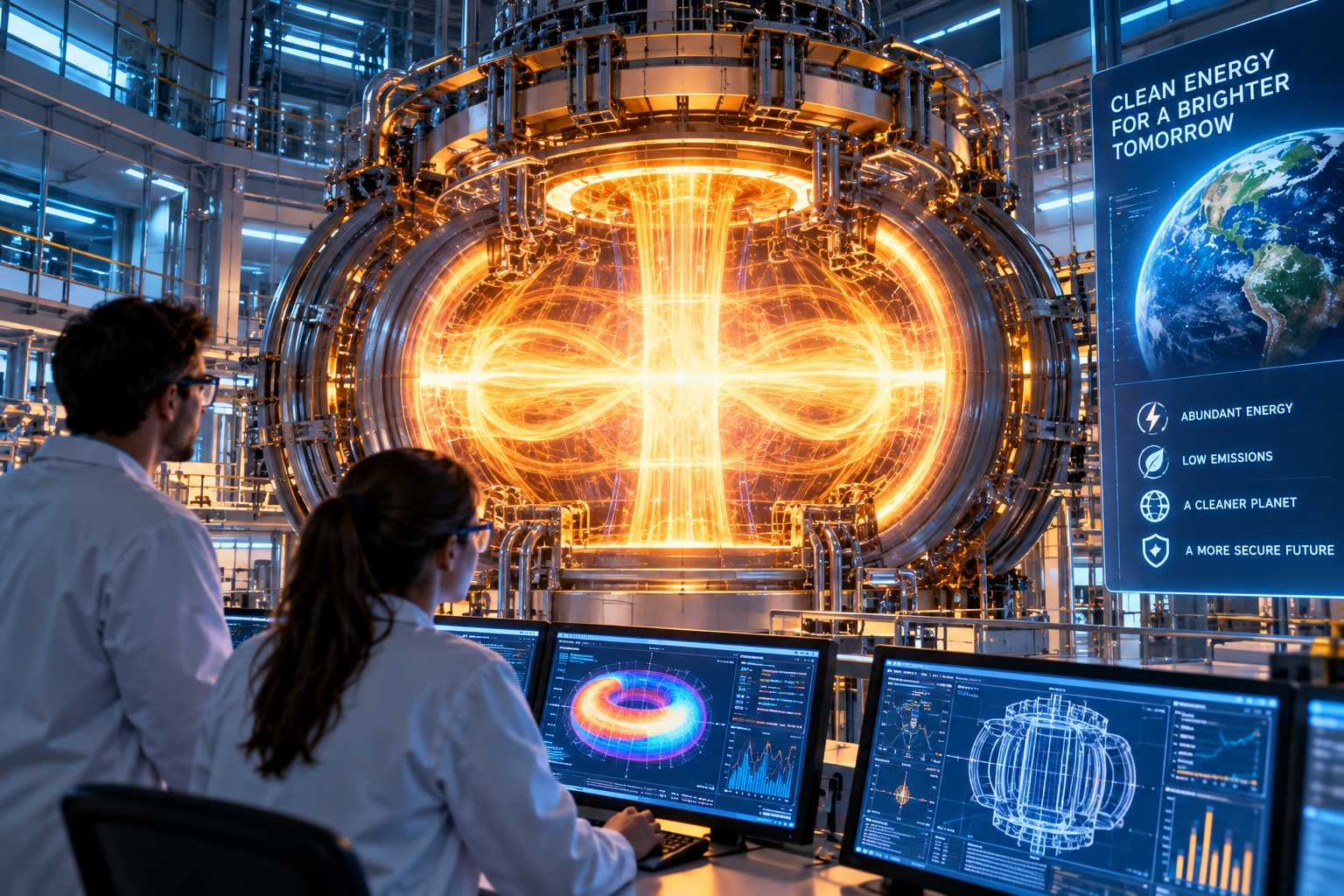
Modern scientific research produces enormous amounts of information. Genomic databases, telescope observations, medical records, climate measurements, particle physics experiments, and laboratory simulations can generate more data than researchers can realistically examine by hand.
AI systems can process these datasets at remarkable speed. Machine learning algorithms can search for relationships and patterns that may not be immediately obvious to researchers, helping scientists narrow down promising areas for further investigation.
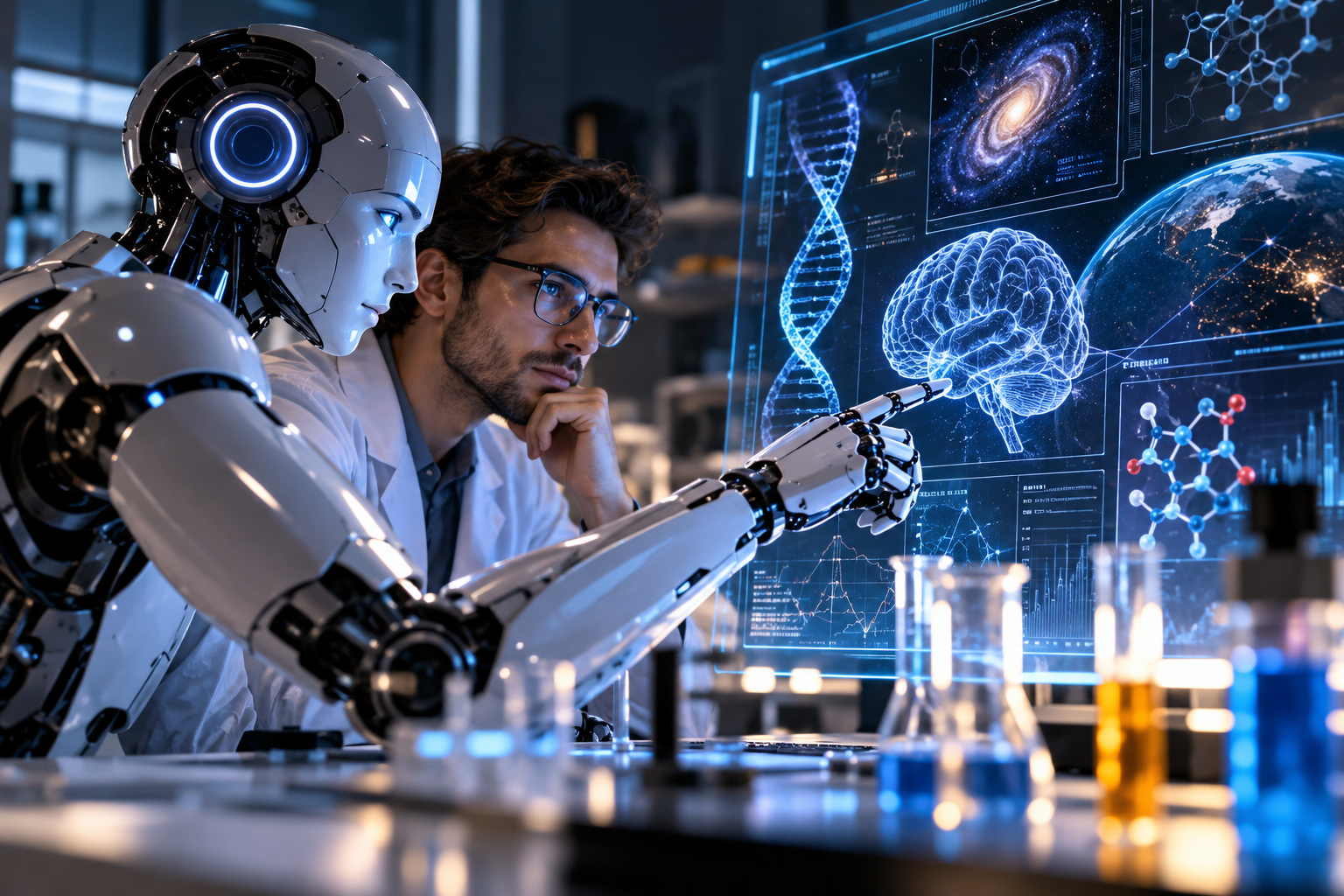
Instead of replacing scientists, AI is increasingly functioning as a powerful research partner. It can help researchers decide which possibilities are worth testing, while humans remain responsible for interpreting results and validating discoveries.
AI Is Already Helping Discover New Possibilities
One of the clearest examples is biology. Understanding how proteins fold and interact is an extremely complicated problem because proteins can take an enormous number of possible structures.
AI-based systems have dramatically improved researchers' ability to predict protein structures. These predictions can help scientists study diseases, understand biological processes, and investigate potential drug targets.
Similar approaches are being explored in materials science, chemistry, astronomy, and physics. Researchers can use AI models to identify promising materials, predict chemical reactions, analyze astronomical observations, and search for unusual signals hidden inside massive datasets.
AI Could Speed Up Drug Discovery
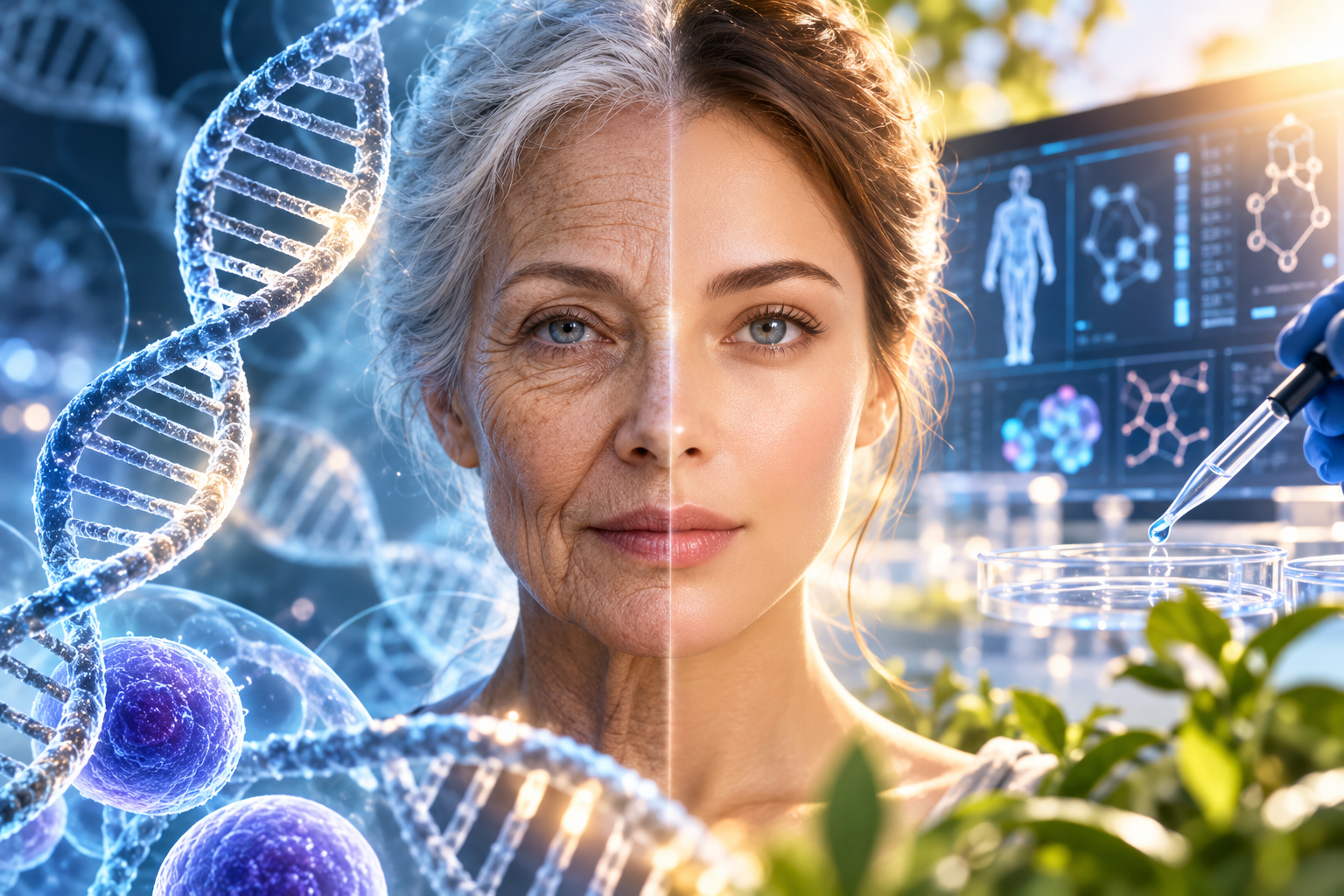
Developing a new medicine traditionally requires years of research and testing. Scientists must identify potential targets, find promising molecules, evaluate their properties, and eventually determine whether a candidate is safe and effective.
AI can help accelerate some of these early stages by analyzing biological data and predicting which molecules might interact with particular targets.
This does not mean AI can simply invent a finished medicine and send it to patients. Laboratory experiments, animal studies where appropriate, clinical trials, and regulatory review are still essential.
However, if AI can reduce the time researchers spend searching through millions of possibilities, it could significantly change how future medicines are discovered.
What About Discoveries Humans Never Expected?
The most interesting possibility is not simply that AI could perform scientific tasks faster. It is that AI might identify relationships that humans would not think to investigate.
Scientific research often begins with a hypothesis. Researchers use existing knowledge to decide what questions are worth asking. AI systems, however, can examine huge numbers of potential relationships without necessarily following the same assumptions or intuitions as human researchers.
In principle, this could allow AI to highlight unexpected patterns and suggest new hypotheses.
But finding an unusual pattern is not the same as discovering a new scientific principle. Scientists still need to determine whether the pattern is real, reproduce the result, identify a plausible explanation, and test it experimentally.
Can AI Become a Scientist?
The idea of an AI independently conducting science sounds futuristic, but parts of the process are already becoming automated.
AI systems can assist with literature analysis, generate hypotheses, analyze experimental results, optimize simulations, and help researchers decide which experiments may be most promising.
The next step could involve increasingly automated scientific workflows in which AI proposes an experiment, robotic laboratory systems perform it, the resulting data is analyzed automatically, and the AI proposes the next experiment.
Such systems could potentially perform thousands of experimental cycles far more quickly than a traditional research team. Human scientists would still play an important role in setting research goals, checking results, interpreting unexpected findings, and ensuring that experiments are scientifically and ethically sound.
The Biggest Challenge: Understanding AI's Answers
One major limitation is that an AI model can sometimes identify a useful prediction without providing a satisfying scientific explanation for it.
Science is not simply about predicting what will happen. Scientists also want to understand why something happens.
If an AI predicts that a particular molecule could be useful for treating a disease, researchers need to understand the biological mechanism behind that prediction. Otherwise, the result may be difficult to validate, reproduce, or build upon.
This makes interpretability an important area of research as AI becomes more deeply integrated into science.
Could AI Make a Scientific Breakthrough?
It is possible that future AI systems could contribute to discoveries that would have taken humans much longer to find. However, predicting exactly when or how such a breakthrough will happen is impossible.
The more realistic possibility is that scientific discovery will become increasingly collaborative. Humans will provide creativity, judgment, scientific context, and experimental expertise, while AI will provide extraordinary computational power and the ability to search through enormous spaces of possibilities.
The result could be a new model of scientific research in which humans and machines work together to explore questions that neither could efficiently tackle alone.
The Future of AI and Science
AI is unlikely to make scientists obsolete. Instead, it may change what scientists spend their time doing.
Researchers could spend less time manually searching through data and more time designing questions, evaluating evidence, conducting experiments, and exploring unexpected results.
The most important breakthroughs may ultimately come from the combination of human curiosity and machine-scale analysis. AI can search through possibilities at a scale humans cannot match, but scientific discovery still requires evidence, experimentation, and critical thinking.
The biggest question may not be whether AI can replace scientists, but whether scientists working with AI can discover things that neither could uncover alone.