AI in Cybersecurity: How Artificial Intelligence Is Changing the Fight Against Cybercrime
Artificial intelligence is transforming cybersecurity by helping organizations detect threats, identify suspicious activity, and respond to attacks faster. But as defenders adopt AI, cybercriminals are using the same technology to create more sophisticated threats. Discover how AI is reshaping the future of cybersecurity.
AI in Cybersecurity: How Artificial Intelligence Is Changing the Fight Against Cybercrime
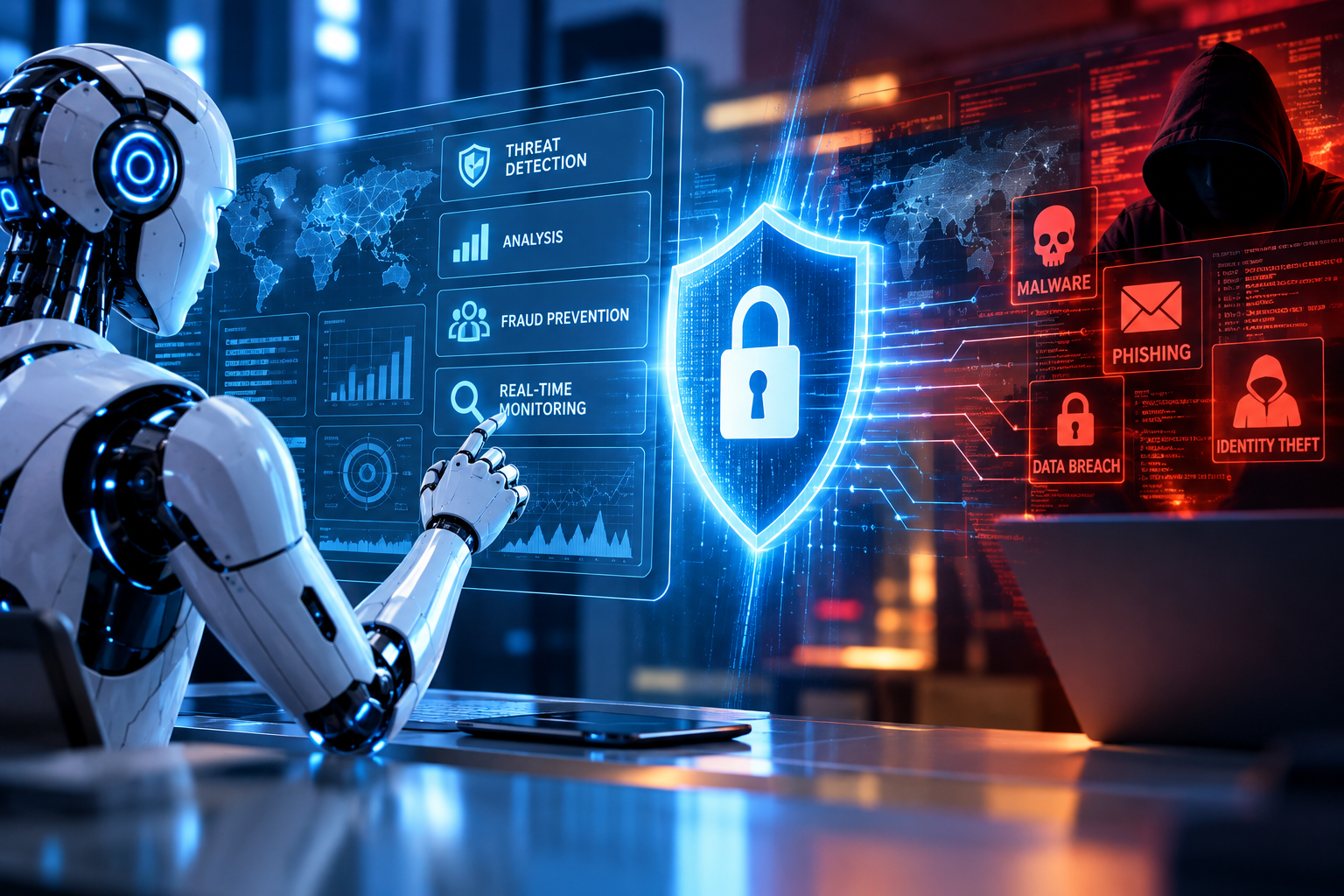
Artificial intelligence is changing the way organizations protect their digital systems. From detecting suspicious activity to identifying potential threats in real time, AI is becoming an important part of modern cybersecurity. At the same time, cybercriminals are also using artificial intelligence to make attacks more sophisticated and harder to detect.
This creates a new cybersecurity race. Security teams are using AI to analyze massive amounts of data and respond to threats faster, while attackers are exploring AI to automate scams, create convincing social engineering attacks, and discover weaknesses in digital systems.
How Is AI Used in Cybersecurity?
Traditional cybersecurity systems often rely on predefined rules and known threat signatures. While these methods remain useful, they can struggle with new or constantly changing attacks. Artificial intelligence can analyze patterns across large amounts of information and identify activity that may indicate a security threat.
Machine learning systems can examine network traffic, login behavior, files, applications, and other security data. When unusual behavior appears, AI-powered security tools can flag it for further investigation.
Threat Detection
One of the biggest applications of AI in cybersecurity is threat detection. AI systems can continuously analyze activity across networks and devices, helping security teams identify unusual patterns that might otherwise go unnoticed.
Fraud and Anomaly Detection
AI can also help organizations identify unusual transactions, login attempts, or account activity. For example, a system may recognize that an account is suddenly being accessed from an unusual location or behaving differently from its normal pattern.
Automated Incident Response
Cybersecurity teams can receive thousands of alerts every day. AI can help prioritize these alerts and automate certain responses, allowing security professionals to focus their attention on the most serious incidents.
AI Can Help Detect Threats Faster
Speed is critical during a cyberattack. The longer an attacker remains inside a network, the greater the potential damage. AI-powered security systems can continuously monitor digital environments and identify suspicious behavior without requiring a human to manually inspect every event.
This does not mean that AI eliminates the need for cybersecurity professionals. Instead, it can act as an additional layer of analysis, helping security teams process information more quickly and investigate potential threats.
Cybercriminals Are Using AI Too
The rise of AI in cybersecurity is not limited to defenders. Attackers can also use artificial intelligence to improve existing cybercrime techniques.
AI can make phishing messages more convincing, help generate content at scale, and assist attackers in adapting their campaigns. AI-generated voice and video can also make impersonation scams more difficult to recognize.
This creates an important challenge for cybersecurity professionals: the same technology that helps identify threats can also contribute to the development of new threats.
AI and Phishing Attacks
Phishing remains one of the most common ways attackers attempt to gain access to accounts and sensitive information. Poor grammar and obvious spelling mistakes have traditionally been signs that a message may be fraudulent.
AI can make fraudulent messages more convincing by generating natural-sounding text and adapting messages to different audiences. This means users can no longer rely solely on obvious language mistakes to identify suspicious communication.
Organizations therefore need stronger authentication, employee awareness, email security, and verification procedures alongside AI-powered detection tools.
AI-Powered Cybersecurity and Human Experts
Despite rapid advances in artificial intelligence, human expertise remains an important part of cybersecurity. Security professionals understand business environments, investigate incidents, evaluate risks, and make decisions that automated systems may not be equipped to handle.
AI can process information at a scale that would be difficult for a human team to manage alone. Humans, however, can provide context and judgment when deciding how an organization should respond to a threat.
The most effective approach is therefore likely to combine automated analysis with human oversight rather than treating AI as a complete replacement for cybersecurity professionals.
The Challenges of Using AI in Cybersecurity
AI-based security systems also have limitations. A system may generate false positives, miss certain threats, or produce inaccurate conclusions depending on the quality of its data and configuration.
Organizations also need to consider privacy and security when deploying AI systems. Security tools may process large amounts of sensitive information, making proper access controls, data protection, and monitoring essential.
What Does the Future of AI Cybersecurity Look Like?
As artificial intelligence becomes more capable, cybersecurity is likely to become increasingly automated. Security platforms may become better at identifying patterns, prioritizing threats, and assisting analysts during investigations.
At the same time, attackers will continue looking for ways to exploit AI. This means the future of cybersecurity will involve an ongoing competition between automated defense systems and increasingly sophisticated digital attacks.
Final Thoughts
AI in cybersecurity is not simply about replacing traditional security tools. It represents a shift toward systems that can analyze enormous amounts of information, recognize unusual behavior, and help security teams respond more efficiently.
However, artificial intelligence is a tool that can be used by both defenders and attackers. Organizations that want to benefit from AI will still need strong security practices, human expertise, reliable data, and appropriate safeguards.
The future of cybersecurity will likely depend not on AI alone, but on how effectively humans and intelligent systems can work together to identify and respond to the next generation of cyber threats.