Smart Glasses vs. Smartphones: Are Smart Glasses the Future of Personal Technology?
Smart glasses are evolving from futuristic gadgets into powerful AI-driven devices. But can they really replace smartphones? Explore how smart glasses compare with smartphones, what they can do today, and what the future of wearable technology may look like.
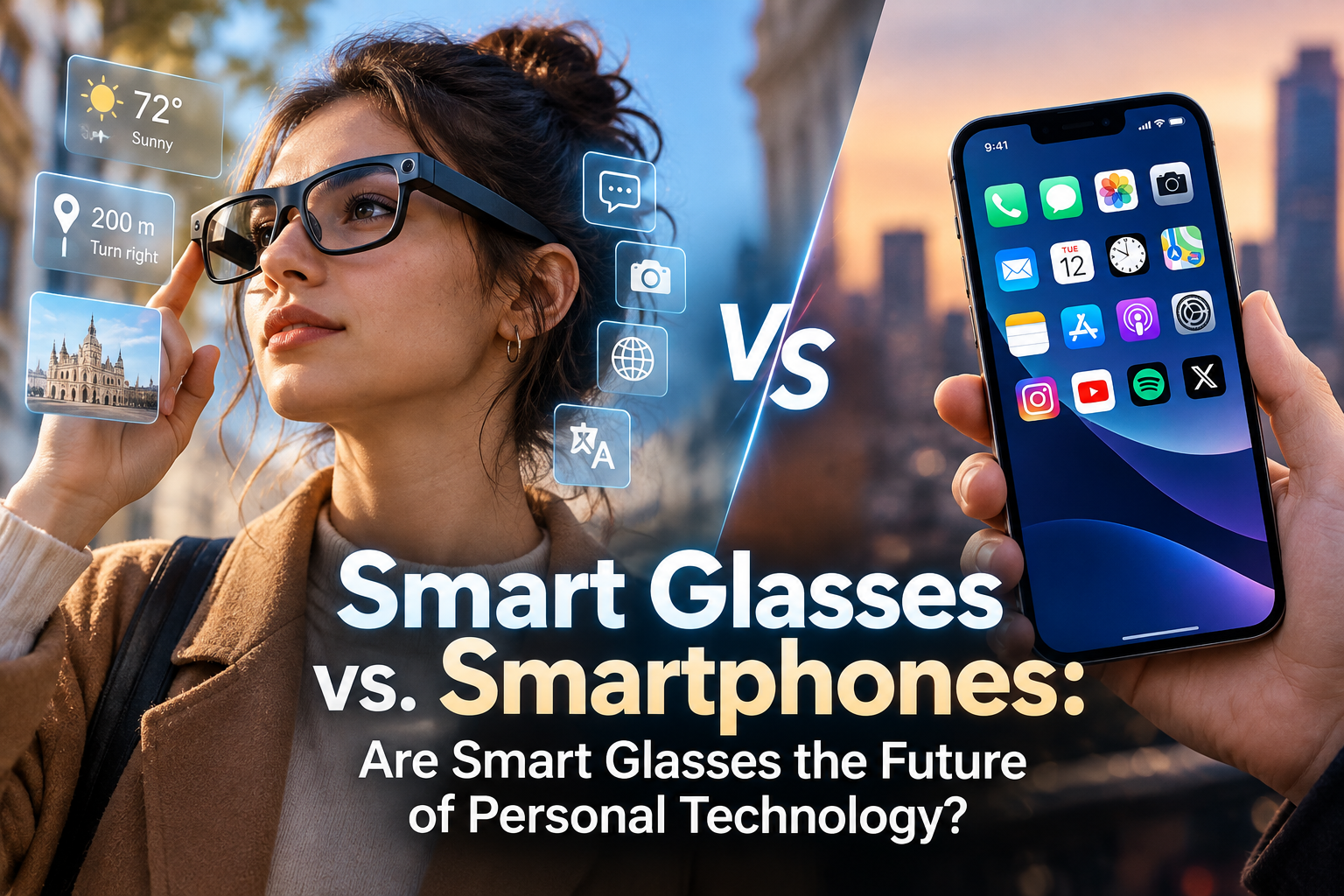
Smart Glasses vs. Smartphones: Are Smart Glasses the Future of Personal Technology?
Smart glasses are evolving from futuristic gadgets into powerful AI-driven devices. But can they really replace smartphones? As companies continue to combine artificial intelligence, cameras, voice assistants, augmented reality, and wearable computing, the relationship between smart glasses and smartphones is changing rapidly.
Smartphones have dominated personal technology for more than a decade, but smart glasses offer something phones cannot: hands-free access to information while keeping your attention on the world around you. This raises an important question—are smart glasses the next major computing platform, or will they remain a companion device to smartphones?
Why Smart Glasses Are Becoming More Popular
Early smart glasses struggled to attract mainstream users because they were expensive, uncomfortable, and limited in functionality. Modern smart glasses are taking a different approach. Instead of trying to place a complete computer in front of your eyes, many newer devices focus on practical features such as cameras, microphones, speakers, voice commands, artificial intelligence, and hands-free communication.
This makes smart glasses more useful in everyday situations. Users can take photos, make calls, listen to music, ask an AI assistant questions, translate information, and interact with digital services without constantly reaching into their pockets.
Smart Glasses vs. Smartphones: What's the Difference?
Smartphones and smart glasses serve many of the same digital needs, but they approach them in completely different ways. A smartphone gives users a large touchscreen and access to thousands of applications, while smart glasses are designed to provide information with minimal physical interaction.
Smartphones
- Large, high-resolution displays
- Thousands of mobile applications
- Powerful cameras and editing tools
- Gaming and entertainment
- Web browsing and social media
- Mobile payments and productivity tools
Smart Glasses
- Hands-free access to information
- Voice-controlled AI assistants
- Built-in cameras and microphones
- Real-time audio and communication
- Potential augmented reality experiences
- Context-aware digital assistance
The biggest difference is the way users interact with each device. Smartphones require users to look down at a screen, while smart glasses can deliver information while the user continues interacting with their surroundings.
Artificial Intelligence Could Change Smart Glasses
Artificial intelligence may be the technology that finally makes smart glasses more useful to mainstream consumers. Instead of simply displaying notifications, future smart glasses could understand what users are seeing, hearing, and asking.
Imagine walking through a foreign city and asking your glasses for a translation, identifying an object without opening an app, receiving directions through audio, or asking an AI assistant to summarize information in front of you.
These experiences could make wearable AI significantly more natural than traditional smartphone interfaces. Rather than opening an application and typing a request, users could simply speak to their glasses.
Can Smart Glasses Replace Smartphones?
Despite their potential, smart glasses still face several challenges before they can completely replace smartphones. Battery life remains an important limitation, particularly for devices that use cameras, displays, wireless connectivity, and artificial intelligence.
Another challenge is the display. Smartphones provide a large screen that is ideal for reading, watching videos, editing documents, browsing websites, and using complex applications. Smart glasses cannot easily reproduce that experience without becoming heavier and less comfortable.
Privacy is another major concern. Cameras and microphones built into wearable devices can create uncomfortable situations in public spaces. Manufacturers will need to develop clear privacy indicators, controls, and policies if smart glasses are going to become a normal part of everyday life.
The Future May Be Smartphones and Smart Glasses Together
Rather than completely replacing smartphones, smart glasses may initially work alongside them. The smartphone can handle demanding tasks such as processing, storage, applications, and high-resolution displays, while smart glasses provide a convenient interface for interacting with those services.
This could create a more connected personal technology ecosystem. Users might receive navigation instructions through their glasses, capture a photo without touching their phone, and then use their smartphone for editing or sharing the content.
What Could Come Next?
The next generation of smart glasses is likely to focus heavily on artificial intelligence, smaller hardware, longer battery life, better cameras, improved audio, and more natural interaction. Augmented reality could also become more important as display technology improves.
If manufacturers can make smart glasses lightweight, affordable, private, and comfortable enough for all-day use, they could become one of the most important wearable technology categories of the next decade.
Final Thoughts
The debate over smart glasses vs. smartphones may not ultimately be about which device wins. Smartphones remain incredibly versatile, while smart glasses offer a completely different way to interact with digital information.
The real change could come from combining the two. As artificial intelligence becomes more capable and wearable hardware becomes smaller, smart glasses could gradually move computing away from the screen and closer to the user's everyday environment.
For now, smartphones remain the primary personal computing device for most people. But smart glasses could represent the beginning of a new era in which technology becomes less visible, more contextual, and increasingly integrated into everyday life.