The Frozen Dead: Inside the Real Warehouses Where Humans Wait to Be Reborn
The Frozen Dead — how cryonics really works, what it costs, and why scientists are split
The Frozen Dead: Inside the Real Warehouses Where Humans Wait to Be Reborn
Hundreds of people are legally dead right now, submerged in liquid nitrogen in industrial tanks, betting six figures on a future medicine that doesn't exist yet.
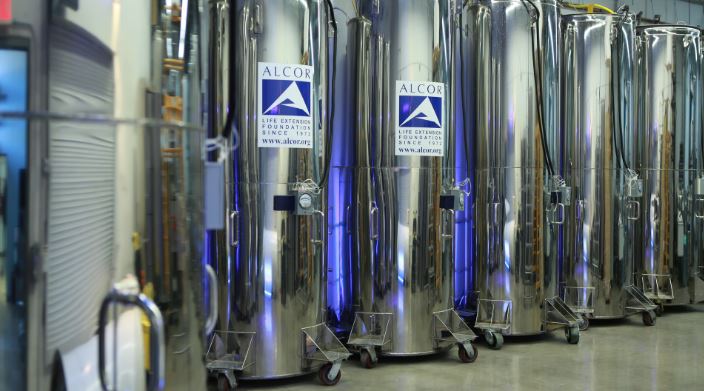
There's a warehouse in the Arizona desert where the air itself seems to bite. Rows of towering steel tanks line the floor, humming quietly under fluorescent light. Inside each one, submerged in liquid nitrogen, floats a human body — or, for those who chose the cheaper option, just a head.
This isn't a horror movie set. It's a real, functioning nonprofit called Alcor Life Extension Foundation, and it currently holds more than 200 "patients" who are, by every legal definition, dead — but who are betting that death isn't quite as permanent as we've always assumed.
Welcome to cryonics: the strange, expensive, and genuinely eerie business of freezing the deceased in hopes that future science can bring them back.
What Cryonics Actually Is
Cryonics is the practice of preserving a human body — or just the brain — at ultra-low temperatures immediately after legal death, in the hope that future medicine will one day be advanced enough to revive the person, cure whatever killed them, and restore them to life.
It sounds like science fiction because, for now, it basically is. No cryonics organization has ever revived anyone. Dennis Kowalski, president of the Cryonics Institute, has bluntly admitted that reanimation is "100 percent not possible today." Every person in those tanks is a wager placed on a future that hasn't arrived.
A newer player, the European Biostasis Foundation, opened a facility in Rafz, Switzerland — joining rows of dewars (the specialized vacuum-sealed storage tanks) to the growing global map of frozen bodies.
What Actually Happens to Your Body
Here's where it gets genuinely unsettling. The moment a cryonics member is declared legally dead, a standby team — sometimes waiting at the person's bedside for days — leaps into action. Speed matters enormously, because organs begin deteriorating the instant blood stops flowing.
The body is packed in ice. Blood is drained and replaced with an organ-preserving solution to buy time before deterioration sets in.
Technicians flood the body with cryoprotectant chemicals — essentially a medical-grade antifreeze — turning tissue into a glass-like solid instead of allowing ice crystals to form and shred cells from within.
The body, or just the head for those who chose "neuropreservation," is lowered into a tank of liquid nitrogen — where it will remain indefinitely, or until someone finds a way to bring it back.
The Cost of Not Dying (Yet)
Immortality, or at least the attempt at it, comes with a bill. At Alcor, whole-body preservation runs around $200,000–$220,000, while preserving just the head costs about $80,000. Most members don't pay out of pocket — they name Alcor as the beneficiary on a life insurance policy, converting a modest monthly premium into a six-figure payout at death.
The Cryonics Institute is the budget option, offering whole-body preservation for roughly $28,000 — a fraction of Alcor's price, though the facilities and protocols differ.
It isn't only the ultra-wealthy anymore, though plenty are involved: reports suggest around 10% of the world's 50 richest people have explored or joined cryonics arrangements. Inventor Ray Kurzweil and producer Steve Aoki have been named as Alcor members, and figures like Peter Thiel have long been linked to the movement, though such claims aren't all independently confirmed. Lawyers have even begun drafting "revival trusts" — legal vehicles designed to preserve a frozen client's wealth until the day they wake up and need it again.
Does Any of This Actually Work?
This is where the fog gets thick — and where actual scientists sharply disagree.
Supporters argue the science isn't as far-fetched as it sounds. A 2008 paper in Rejuvenation Research laid out the core case: extremely low temperatures can pause chemical decay for centuries, vitrification can dramatically cut ice damage, and "legally dead" doesn't necessarily mean "irreversibly dead" — death, the argument goes, is a process that unfolds over hours, not an instant. Some animal studies even found that vitrified, rewarmed brains showed no ice-crystal damage at all — though the cryoprotectant chemicals themselves proved toxic to cells at the concentrations required.
That toxicity is the crux of the problem. The very chemicals used to prevent freezing damage are, in high concentrations, poisonous to the tissue they're protecting. It's a race between two forms of destruction — freeze or poison — and current technology hasn't found a way to dodge both.
"The harsh reality is that current cryonic methods give patients only false hope. As practiced, they are both unscientific and profoundly destructive, permanently damaging cells, tissues, and organs."
— Shannon Tessier, Cryobiologist, Harvard Medical School / Massachusetts General HospitalClive Coen, a neuroscientist at King's College London, went further, calling cryonics "a hopeless aspiration that reveals an appalling ignorance of biology." One neurobiologist at McGill University put it more bluntly still: you could count the number of neuroscientists who take cryonics seriously on one hand.
Nobody — not the optimists, not the skeptics — currently knows how to reverse the freezing damage, cure whatever killed the patient, restore a functioning brain, and reboot a person's consciousness. Revival isn't a known process waiting to be applied. It's a hope, resting on the idea that future science will solve problems today's science can't even fully define.
Ghosts in the Machine
Cryonics hasn't always been the clean, corporate operation it presents itself as today. In the 1970s, a man named Robert Nelson — described as a former television repairman with no scientific background — ran the Cryonics Society of California. He was later sued after several bodies in his care were allowed to thaw and decompose, a catastrophic failure that still haunts the industry's reputation.
Modern operations insist they've left that era far behind, with strict protocols, continuous monitoring, and standby teams. But the fundamental unease remains: hundreds of human beings, legally deceased, lying in liquid nitrogen inside industrial buildings, waiting — perhaps forever — for a call that may never come.
Is It Even Legal?
In most of the world, the answer is complicated. Because cryonics can only legally begin after a person is pronounced dead, most countries treat preserved individuals simply as deceased persons in long-term storage — not patients in any medical sense. France doesn't recognize cryonics as a legal option for handling remains at all; only burial, cremation, or donation to science are permitted. In British Columbia, Canada, selling cryonics arrangements has been illegal since 2015.
That legal ambiguity is part of what makes the whole enterprise so strange. These aren't hospital patients under medical care. They're not quite deceased in the way a body in a cemetery is deceased. They occupy a legal and philosophical gray zone — not alive, not gone, just waiting.
So, Would You Do It?
Strip away the tanks and the liquid nitrogen and the six-figure price tags, and cryonics is really just a very literal, very cold version of an ancient human wish: that death doesn't have to be the end of the story.
Whether it's a legitimate long-shot bet on future medicine or an elaborate, expensive act of denial depends entirely on who you ask. What's not in dispute is that it's real, it's happening right now in facilities in Arizona, Michigan, and Switzerland — and hundreds of people have already made their choice, quietly waiting in the dark, in the cold, for a future that may or may not ever come to wake them up.